
Tail, Regime, and Exposure Controls for Robust Portfolios.
Introduction
Risk management is no longer just about avoiding losses—it’s about understanding when, where, and why they might occur. Quantpedia delivers a comprehensive suite that tracks tail events, regime shifts, and portfolio exposures, offering both forward-looking controls and retrospective insights. Rather than a fresh start, these 2021–2025 innovations represented an expansion of Quantpedia’s pre-existing framework of risk and portfolio management tools. These tools give practitioners a clear lens into potential vulnerabilities and resilience, turning complex risk data into actionable intelligence.
Market Regimes and Correlation Analysis
The Factor Cycle Report, based on the “Momentum Turning Points” research, classifies markets into four states—Bull Market, Correction, Bear Market, and Recovery—using short- and long-term momentum signals. It visualizes the current state of nearly 50 markets and factor strategies, with tables showing recent performance and charts tracking current and historical states over the past year.
Inter-Market Correlation Report tracks average correlations across key segments, including equity sectors, regions, commodities, currencies, and fixed income. It highlights which market segments are moving in unison or diverging, with summary tables showing current and historical correlation ranges and charts illustrating correlation trends over the last three years.

Commodity Phases Analysis Report is a recent addition to Quantpedia Pro’s expanding suite of over 20 advanced reports. It examines portfolio behaviour across inflationary and disinflationary phases, using commodity market movements as a guide, and provides investors with a practical framework for assessing macroeconomic impacts on performance.
Market Stress and Strategy Performance Reports
Quantpedia Pro has introduced two new event analysis reports—Fixed Income Crisis and Commodity Crisis—now available to all clients. These reports expand on the methodology of the previous Crisis Analysis report by identifying 20 additional periods that were particularly challenging for investors and traders in commodity and fixed income markets. The reports allow for evaluation of performance under these stressed conditions, both for individual trading strategies and for model portfolios composed of multiple ETFs and/or systematic strategies. By providing insights into portfolio behavior during turbulent market periods, these reports serve as practical tools for risk assessment, strategy validation, and resilience analysis.

Tail Risk and Breach Monitoring
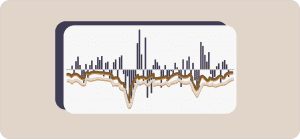
The Value at Risk (VaR) report systematized distributional risk assessment with multi-horizon breach tracking and VaR distribution panels. Monte Carlo Analysis complements VaR with 100 simulated alternative histories, revealing percentile bands for returns, drawdowns, and Sharpe ratios to examine adverse but plausible scenarios.
Crisis and Shock Analysis
Event-driven tools quantify resilience to turmoil: Crisis Hedge reporting identifies strategies with low downside correlation in negative months and bear markets; Fixed Income Crisis and Commodity Crisis reports gauge performance during market-specific stress windows. Worst One-Day Shocks and Geopolitical Events analysis contextualize path dependence around extreme events for equities, treasuries, and commodities, extendable to custom Model Portfolios.

Exposure and Contribution Surveillance
The Risk Monitor tracks rolling volatility (20-day), rolling correlations (3-month), and summary statistics for vol, contributions, and maximum drawdowns. Automated equity-like asset detection uses multi-factor signals to classify portfolio components (later expanded to equity-, fixed-income-, and “other”-like exposures), enabling targeted constraints and attribution.
Conclusion
Quantpedia’s risk suite turns raw market data into actionable insights. By integrating tail metrics, crisis testing, regime analysis, and live exposure monitoring, it equips practitioners to anticipate stress, calibrate controls, and interpret outcomes consistently. The result is a cohesive framework that aligns forward-looking risk management with retrospective forensics across all market environments.
