Pragmatic Asset Allocation Across Market Cycles
Introduction
Pragmatic Asset Allocation (PAA) is a systematic, multi-asset investment strategy designed to adapt dynamically to evolving market conditions. Rather than maintaining a static equity exposure, the model actively allocates capital across a diversified set of asset classes—including equities, bonds, commodities, gold, and cash-like instruments—using momentum-based signals and disciplined periodic rebalancing. The strategy’s primary objective is to deliver attractive long-term returns while materially reducing drawdowns during adverse market environments.
It has now been two highly volatile years since we first published our paper on PAA, making this an opportune moment to review the strategy’s performance over the past year.
Long-Term Performance of the Model
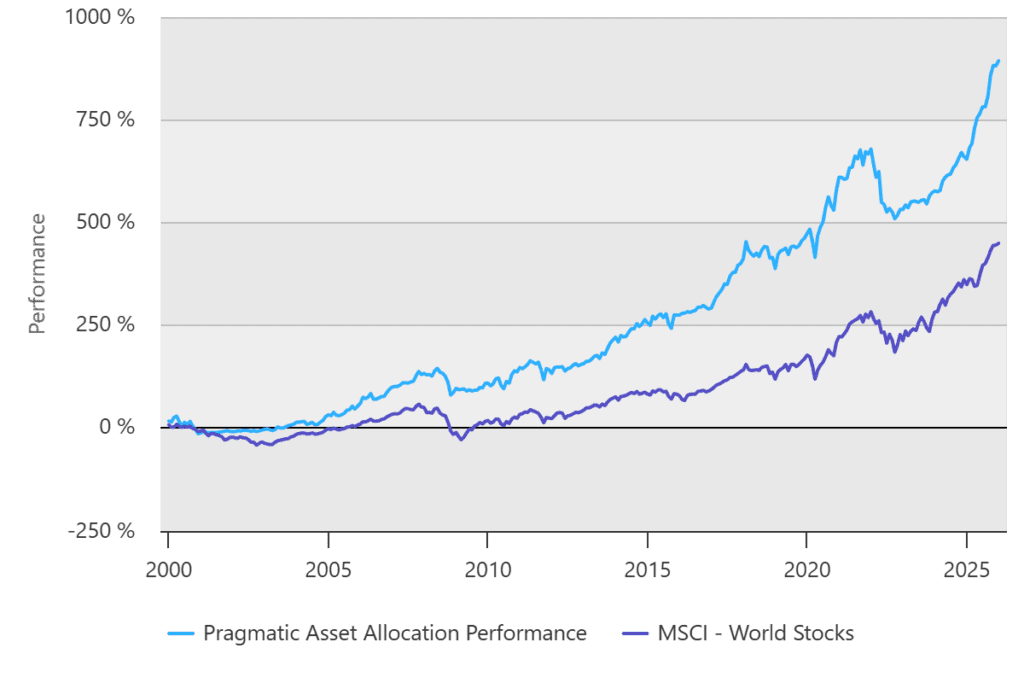

The long-term performance chart illustrates that the Pragmatic Asset Allocation model outperforms global equities over time. While equity markets experience pronounced drawdowns and extended recovery periods, the diversified structure of the model enables smoother capital growth. Performance statistics confirm the visual evidence. The model delivers competitive annualized returns with lower volatility and improved risk-adjusted performance, as reflected by higher Sharpe ratios and reduced maximum drawdowns.
Portfolio Composition Over Time
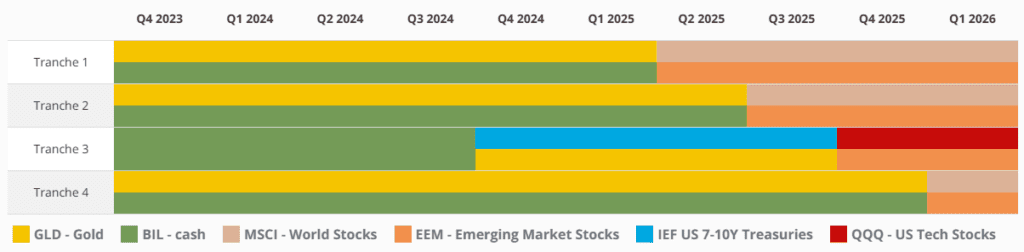
The evolution of the portfolio composition over time can be reviewed in the separate Quantpedia report. One of the charts shows how the portfolio composition evolved over the last 10 quarters.
Allocation changes from 2023 to 2025 were primarily driven by the interaction of three factors: elevated geopolitical risk, inflation uncertainty, and shifting interest rate expectations. The Russian invasion of Ukraine and the high inflation period that followed caused the yield curve to invert, which was a signal for risk-off (defensive positioning) in our model. In this case, in 2022, the model began to take a position in gold (which was over 50% of the portfolio in Q1 of 2025). As markets accommodated high-stakes geopolitical chaos (2025), the gold position was gradually sold, and equities were bought back. However, the gold position served as a strong hedge in 2025 and helped the model outperform and, at the same time, be negatively correlated with the MSCI World benchmark.
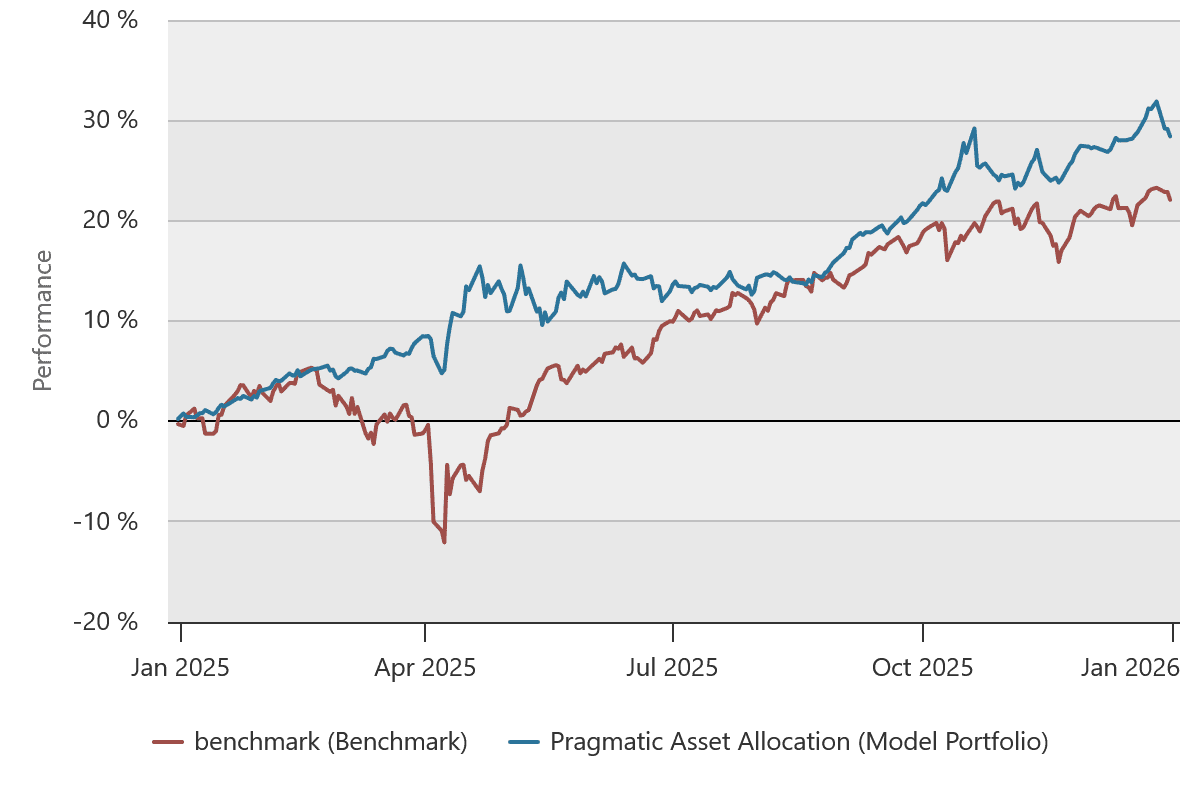
This approach reflects the core philosophy of the model: adapt through rotation rather than binary allocation shifts.
Recent and Forward-Looking Portfolio Allocation
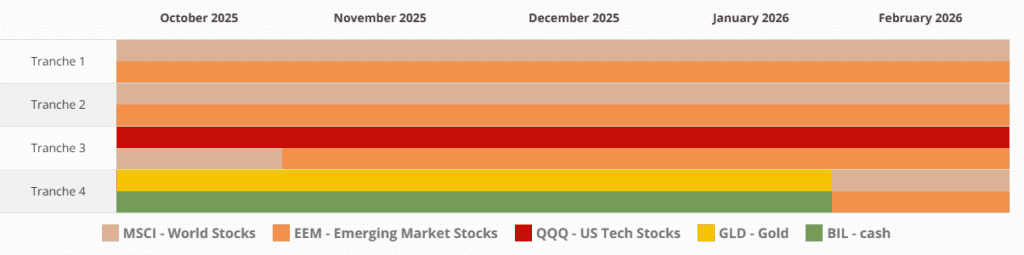
Focusing on the most recent months and near-term outlook, the portfolio remains tilted toward equities. This positioning is consistent with a continuing bull market environment, where participation is important.
Equity Market Phases Framework
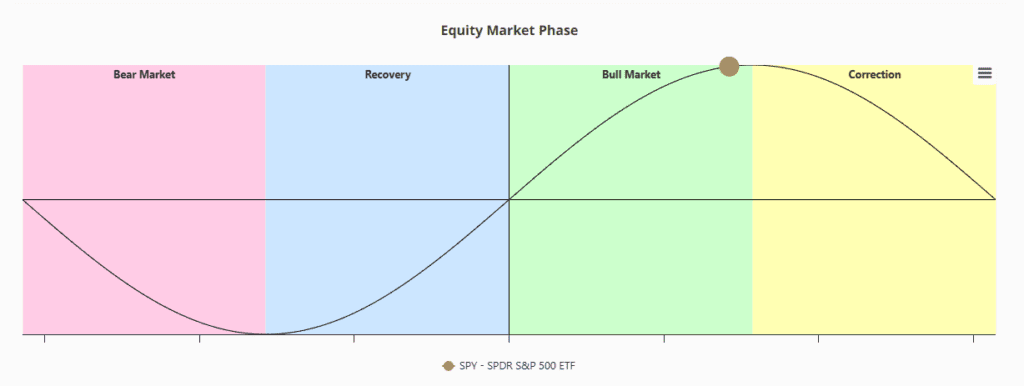
The following section analyzes the behavior of the model across different equity market phases, defined using a combination of long-term and short-term momentum signals. Any Model Portfolio’s sensitivity to equity market phases can be analyzed in the specialized report. The schematic representation illustrates the four market regimes for the equity market: Bull Market, Correction, Bear Market, and Recovery and where are we probably at this moment.
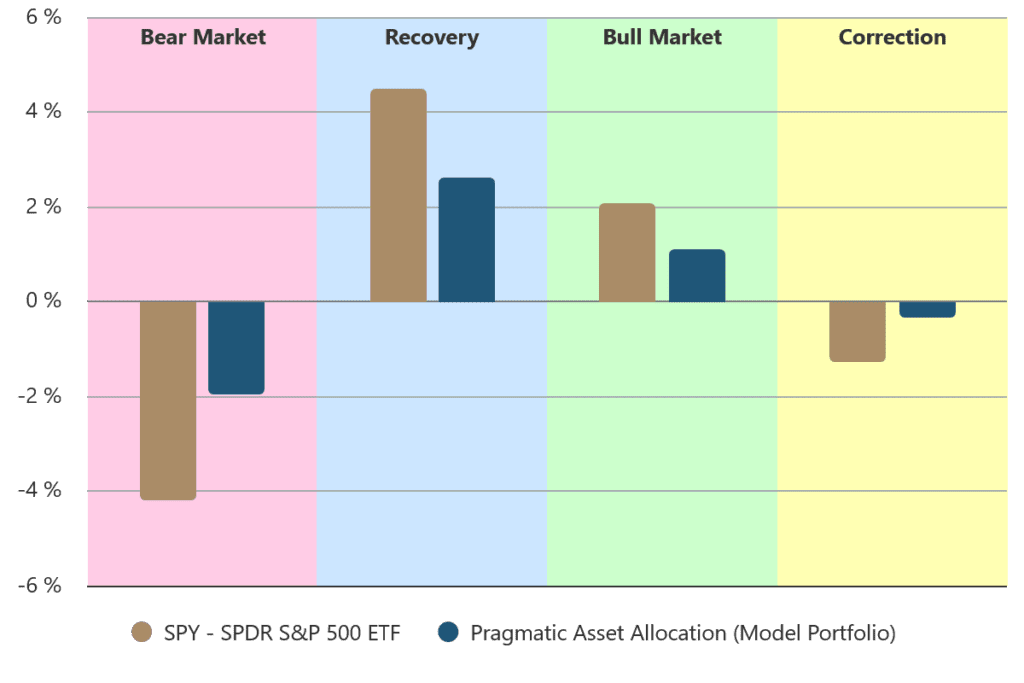
Average performance across market phases shows that the model significantly limits losses during Bear Markets and Corrections while maintaining solid performance during Bull Markets.
Forward-looking returns indicate that even in later stages of Bull Markets, equity exposure remains justified on average, although volatility tends to increase.
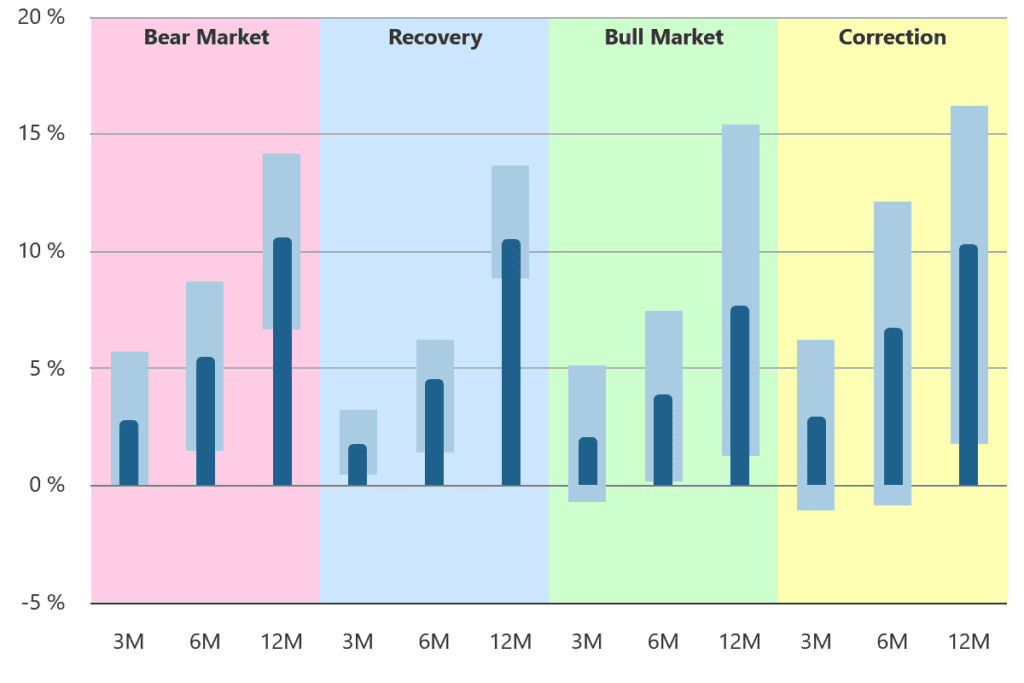
The equity market phase analysis suggests that the current environment corresponds to a late-stage bull market. Historically, this phase is associated with continued positive returns, but also with increasing volatility and a higher probability of temporary corrections.
Importantly, late-stage bull markets do not imply an immediate transition into a bear market. Instead, they require more disciplined risk management and diversification, which is reflected in the model’s current positioning. Therefore, the current signal of the Pragmatic Asset Allocation model remains bullish. As a result, the portfolio maintains a meaningful allocation to equities going into the next rebalancing period.
While the probability of short-term corrections has increased, historical evidence indicates that maintaining equity exposure during late-stage bull markets remains beneficial on average. The model therefore continues to favor equities, complemented by diversification and downside protection rather than a full risk-off repositioning.
One-Day Shocks and Extreme Market Events
To evaluate resilience under extreme conditions, the next section analyzes market reactions following the worst one-day shocks over the past century. We will use our One-Day Shocks & 100yrs Historical Events report for this.
Equity Market Shocks
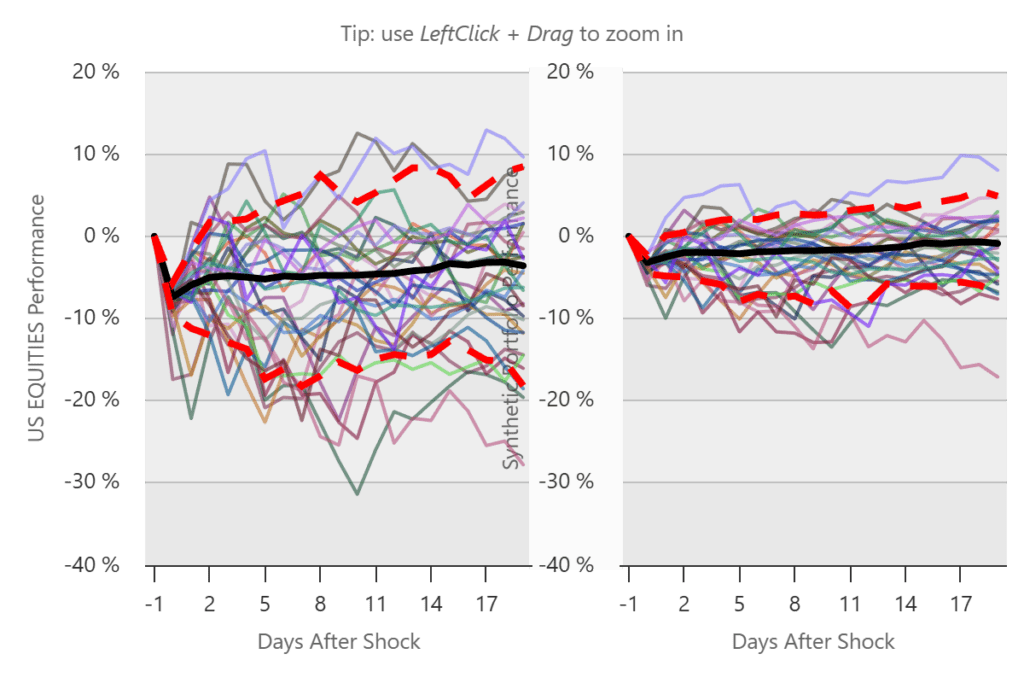
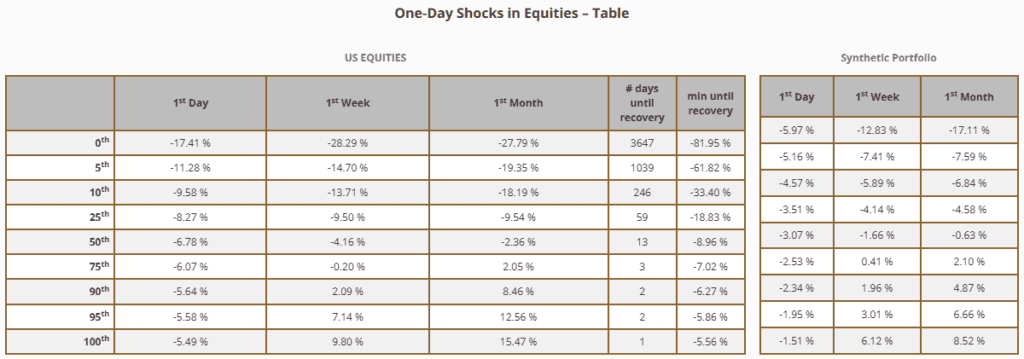
Equities typically experience severe short-term losses after extreme one-day shocks. The model portfolio, however, shows smaller initial drawdowns and faster stabilization, highlighting the benefits of diversification.
Wars and Geopolitical Conflicts

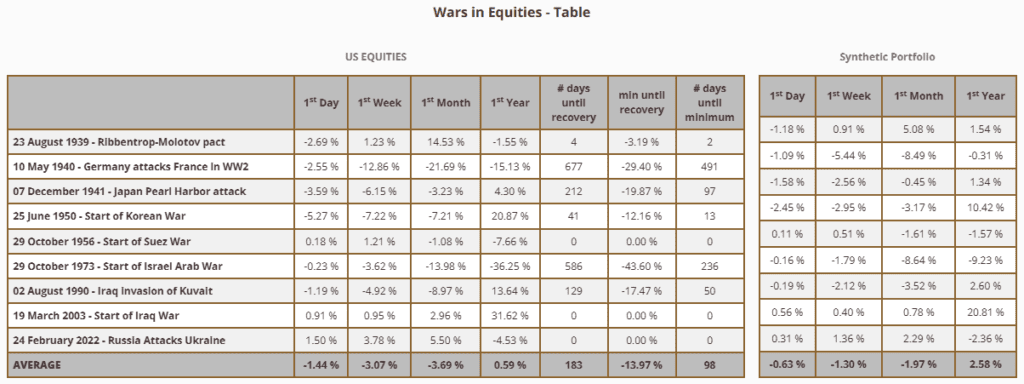
Wars represent some of the most severe stress scenarios for financial markets. Historical data show that equities suffer significant drawdowns at the onset of conflicts. The model portfolio consistently experiences smaller losses and faster recoveries due to its exposure to defensive assets such as gold.
Conclusion
Pragmatic Asset Allocation is designed to navigate full market cycles through systematic diversification and adaptive allocation. The analysis across market phases, one-day shocks, and wars highlights the core strength of the model: resilience.
In 2025, the strategy successfully balanced equity participation with effective risk management amid heightened geopolitical uncertainty. Although equity markets appear to be approaching a late-stage bull market environment, the current signal remains bullish, supporting continued equity exposure into the next rebalancing period.
Rather than attempting to time market turning points, the model relies on rotation, diversification, and disciplined rebalancing. This approach allows the portfolio to remain invested during favorable conditions while maintaining robust protection against adverse scenarios.
Author: David Mesíček, Junior Quant Analyst, Quantpedia
Are you looking for more strategies to read about? Sign up for our newsletter or visit our Blog or Screener.
Do you want to learn more about Quantpedia Premium service? Check how Quantpedia works, our mission and Premium pricing offer.
Do you want to learn more about Quantpedia Pro service? Check its description, watch videos, review reporting capabilities and visit our pricing offer.
Do you want algorithmic access to the full Quantpedia database via the API? Subscribe to Quantpedia Pro, ask for an API key, and explore the in/out-of-sample statistics, source academic papers, and code snippets — ideal for quantitative research, systematic trading workflows, and AI model training.
Are you looking for historical data or backtesting platforms? Check our list of Algo Trading Discounts.
Or follow us on:
Facebook Group, Facebook Page, Telegram, Twitter, Linkedin, Medium or Youtube
Share onLinkedInTwitterFacebookRefer to a friend